Updatetime:2026-09-10
【Enlarge】【Reduce】
The International Geographical Union Commission on Cold and High Altitude Regions (IGU CHAR) was established to advance the international study of climate change impacts and sustainable development in the polar and high-altitude regions. The goals of this commission are to promote cooperation and exchange of knowledge between different regions of the world, promote international and interdisciplinary research on the rapid changes and risks in the polar and high-altitude regions, and provide scientific support for addressing climate change and sustainable development. IGU CHAR forms an international network of scientists with common interests, promotes worldwide cooperation, and stimulates participation and interaction for young and early-career scientists. Furthermore, IGU CHAR shares information on academic activities and research progress, develops international research projects and organizes international conferences and training workshops.
In 2024, IGU CHAR continued to advance scientific research and international collaboration, focusing on the rapid changes in the polar and high-altitude regions. Two international meetings related to climate and cryospheric changes were successfully held, bringing together scientists from diverse disciplines and countries. In addition to the research and conference activities, the new steering committee and honorary members from different countries and research backgrounds were selected this year. A webpage for IGU CHAR was established, providing a platform for sharing related research progress and activities with the public.
Key Achievements:
A. Steering committee and honorary members
|
Steering committee |
Full name |
Country |
Institution |
Email address |
|
Chair-Person |
Shichang Kang |
China |
Northwest Institute of Eco-Environment and Resources, Chinese Academy of Sciences, China |
shichang.kang@lzb.ac.cn |
|
Secretary |
Lekhendra Tripathee |
United Kingdom |
Environment Agency, United Kingdom |
lekhendra.t@gmail.com Lekhendra.Tripathee@environment-agency.gov.uk |
|
Steering committee member 1 |
Wieslaw Ziaja |
Poland |
Institute of Geography and Spatial Management of the Jagiellonian University, Krakow, Poland |
wieslaw.ziaja@uj.edu.pl |
|
Steering committee member 2 |
Andrey Petrov |
USA |
Department of Geography, University of Northern Iowa, Cedar Falls IA, USA |
andrey.petrov@uni.edu |
|
Steering committee member 3 |
Dana Micu |
Romania |
National Meteorological Administration (Meteo Romania) Department of Climatology, Romania |
dana.micu@meteoromania.ro |
|
Steering committee member 4 |
David William Hedding |
South Africa |
Department of Geography, University of South Africa, South Africa |
heddidw@unisa.ac.za |
|
Steering committee member 5 |
Sophie Hou |
France |
Université Paris 1 Panthéon Sorbonne, France |
sophie.hou@univ-paris1.fr sophie.hou.cr@gmail.com |
|
Steering committee member 6 |
Feiyue Wang |
Canada |
University of Manitoba, Canada |
feiyue.wang@umanitoba.ca |
|
Steering committee member 7 |
Koji Fujita |
Japan |
Nagoya University, Japan |
cozy@nagoya-u.jp |
|
Steering committee member 8 |
Muhammad Naveed Anjum |
Pakistan |
Department of Land and Water Conservation Engineering, PMAS Arid Agriculture University Rawalpindi, Pakistan |
naveedwre@uaar.edu.pk |
|
Steering committee member 9 |
Suraj Mal |
India |
Center for the Study of Regional Development. Jawaharlal Nehru University, India |
surajmal@jnu.ac.in |
|
Honorary members |
Full name |
Country |
Institution |
Email address |
|
Honorary member 1 Past Chair of the Commission |
Nancy Doubleday |
Canada |
Department of Philosophy, McMaster University, Canada |
doublen@mcmaster.ca |
|
Honorary member 2 Past Chair of the Commission |
Tatiana Vlasova |
Russia |
Institute of Geography, Russian Academy of Sciences, Russia |
tatiana.vlsv@gmail.com vlasova@igras.ru |
|
Honorary member 3 |
Dario Trombotto |
Argentina |
Ianigla-CCT Mendoza-Conicet. Casilla de Correo 330, 5500 Mendoza, Argentina |
dtrombot@lab.cricyt.edu.ar dtrombot@mendoza-conicet.gob.ar |
|
Honorary member 4 |
Jef Vandenberghe |
Netherlands |
Department of Earth Sciences VU University, De Boelelaan, Amsterdam, The Netherlands |
jef.vandenberghe@vu.nl |
|
Honorary member 5 Past Vice-Chair of the Commission |
Prakash Chandra Tiwari |
India |
Department of Geography, Kumaun University, India |
pctiwari@yahoo.com |
B. Meetings
(1) “International Training Course on Cryosphere Observation, Monitoring, and Research along the Belt and Road”
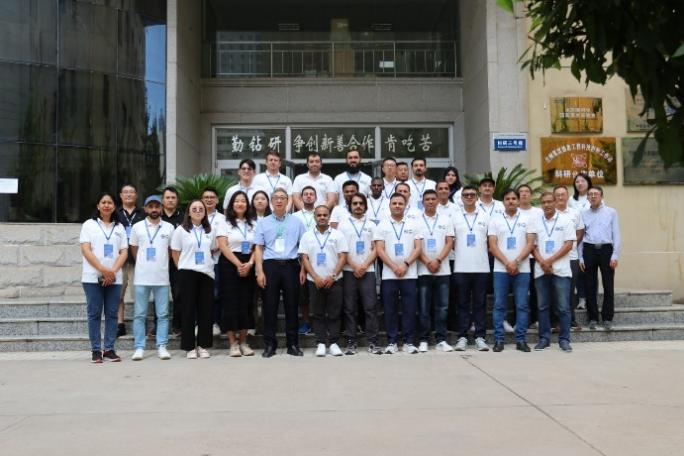
The International Training Course on Cryosphere Observation, Monitoring, and Research along the Belt and Road was successfully held from August 15 to 26, 2024 in Lanzhou, China. Over 30 trainees from 10 countries and international organizations actively participated in this training course. The topics included cryospheric science and its subdisciplines, methods for observing and processing cryosphere data, earth system multi-sphere interaction, and the role of cryosphere in sustainable development. Experts from different universities and institutes delivered insightful lectures both in person and online.
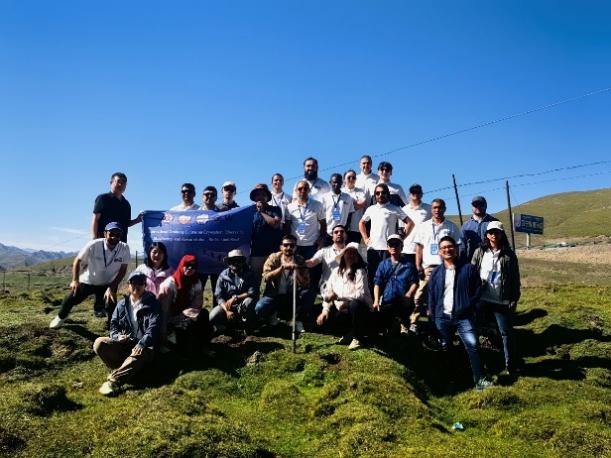
The course combined intensive classroom training with a field session focusing on sampling techniques for glaciers, permafrost, and snow cover. This program notably strengthened the skills of cryospheric practitioners from developing nations, especially in the High Mountain Asia region, in observing cryosphere variables and researching changes in polar and high-mountain areas.
(2) “International Workshop on Cryosphere and Climate Change”
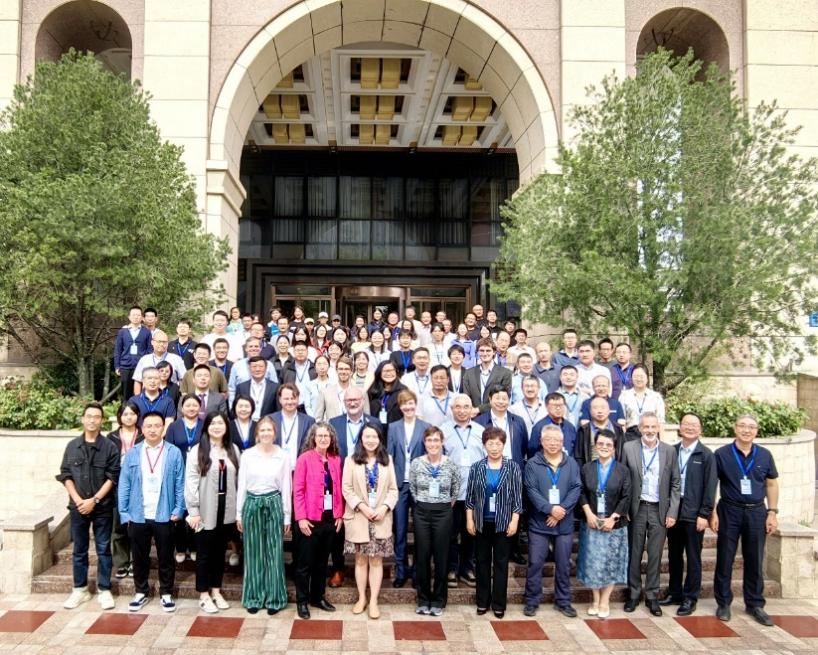
The International Workshop on Cryosphere and Climate Change took place in Beijing, China, on September 13-14, 2024, with over 100 cryosphere scientists participating. The workshop focused on key topics such as the impact of global warming on cryosphere, sea-level rise, declines in snowpack and ice mass, changes in Arctic and Antarctic sea ice, permafrost thaw emissions, and the communication of science to policymakers. It highlighted the latest research on cryospheric changes, emphasizing the significant global impacts of cryosphere loss. Panel discussions addressed research gaps and future directions, especially in relation to the Paris Agreement and the upcoming Seventh IPCC Assessment Cycle (AR7). The event also explored strategies for effectively communicating these changes to policymakers.