Updatetime:2026-09-10
【Enlarge】【Reduce】
The International Geographical Union Commission on Cold and High Altitude Regions (IGU CHAR) was established to advance the international study of climate change impacts and sustainable development in the polar and high-altitude regions. The goals of this commission are to promote collaboration and exchange of knowledge between different regions of the world, promote international and interdisciplinary research on rapid changes and risks in the polar and high-altitude regions, and provide scientific support for addressing climate change and sustainable development.
In 2025, IGU CHAR continued to advance scientific research, promote international collaboration, and enhance educational and public science popularization activities. Throughout the year, IGU CHAR co-organized three meetings, participated in China’s Third Glacier Inventory project, and contributed to an international training workshop for young researchers and science popularization activities for the public.
Steering committee and honorary members
|
Steering Committee |
Full name |
Country |
Institution |
Email address |
|
Chair-Person |
Shichang Kang |
China |
Institute of Mountain Hazards and Environment (IMHE), Chinese Academy of Sciences, China |
shichang.kang@lzb.ac.cn |
|
Secretary |
Lekhendra Tripathee |
TheUnited Kingdom |
Environment Agency,theUnited Kingdom |
lekhendra.t@gmail.com Lekhendra.Tripathee@environment-agency.gov.uk |
|
Steering committee member 1 |
Wieslaw Ziaja |
Poland |
Institute of Geography and Spatial Management of the Jagiellonian University, Krakow, Poland |
wieslaw.ziaja@uj.edu.pl |
|
Steering committee member 2 |
Andrey Petrov |
USA |
Department of Geography, University of Northern Iowa, Cedar Falls IA, USA |
andrey.petrov@uni.edu |
|
Steering committee member 3 |
Dana Micu |
Romania |
National Meteorological Administration (Meteo Romania) Department of Climatology, Romania |
dana.micu@meteoromania.ro |
|
Steering committee member 4 |
David William Hedding |
South Africa |
Department of Geography, University of South Africa, South Africa |
heddidw@unisa.ac.za |
|
Steering committee member 5 |
Sophie Hou |
France |
Université Paris 1 Panthéon Sorbonne, France |
sophie.hou@univ-paris1.fr sophie.hou.cr@gmail.com |
|
Steering committee member 6 |
Feiyue Wang |
Canada |
University of Manitoba, Canada |
feiyue.wang@umanitoba.ca |
|
Steering committee member 7 |
Koji Fujita |
Japan |
Nagoya University, Japan |
cozy@nagoya-u.jp |
|
Steering committee member 8 |
Muhammad Naveed Anjum |
Pakistan |
Department of Land and Water Conservation Engineering, PMAS Arid Agriculture University Rawalpindi, Pakistan |
naveedwre@uaar.edu.pk |
|
Steering committee member 9 |
Suraj Mal |
India |
Center for the Study of Regional Development, Jawaharlal Nehru University, India |
surajmal@jnu.ac.in |
|
Honorary Member |
Full name |
Country |
Institution |
Email address |
|
Honorary member 1 Past Chair of the Commission |
Nancy Doubleday |
Canada |
Department of Philosophy, McMaster University, Canada |
doublen@mcmaster.ca |
|
Honorary member 2 Past Chair of the Commission |
Tatiana Vlasova |
Russia |
Institute of Geography, Russian Academy of Sciences, Russia |
tatiana.vlsv@gmail.com vlasova@igras.ru |
|
Honorary member 3 |
Dario Trombotto |
Argentina |
Ianigla-CCT Mendoza-Conicet. Casilla de Correo 330, 5500 Mendoza, Argentina |
dtrombot@lab.cricyt.edu.ar dtrombot@mendoza-conicet.gob.ar |
|
Honorary member 4 |
Jef Vandenberghe |
The Netherlands |
Department of Earth Sciences VU University, De Boelelaan, Amsterdam, The Netherlands |
jef.vandenberghe@vu.nl |
|
Honorary member 5 Past Vice-Chair of the Commission |
Prakash Chandra Tiwari |
India |
Department of Geography, Kumaun University, India |
pctiwari@yahoo.com |
BACO-25 is an international conference in the field of earth sciences, jointly hosted by the International Association of Meteorology and Atmospheric Sciences (IAMAS), the International Association of Cryospheric Sciences (IACS), and the International Association for the Physical Sciences of the Oceans (IAPSO). BACO-25 was held in Busan, Republic of Korea, from 20 to 25 July 2025. This international conference brought together around 1500 participants from 45 countries, including atmosphere, cryosphere and ocean scientists as well as industry professionals. Each of the three international associations held parallel sessions. To present the latest results and improve understanding of changes in the cryospheric environment and biogeochemical cycles at different scales, IGU CHAR co-organized a parallel session titled “C05 Cryospheric biogeochemical cycles and environmental effects” under IACS. More than 50 scientists, young researchers, and students engaged in scientific presentations and discussions about the impacts of cryospheric changes in the mountain and polar regions. This parallel session contributed to advancing scientific research and international collaboration of IGU CHAR.
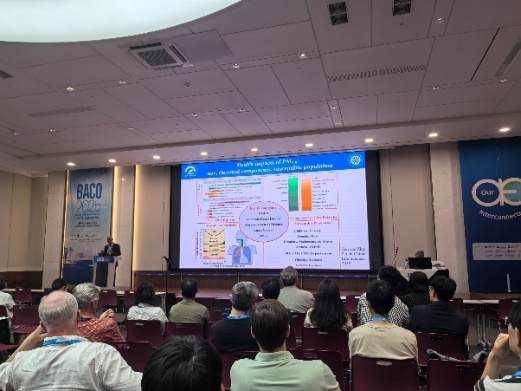
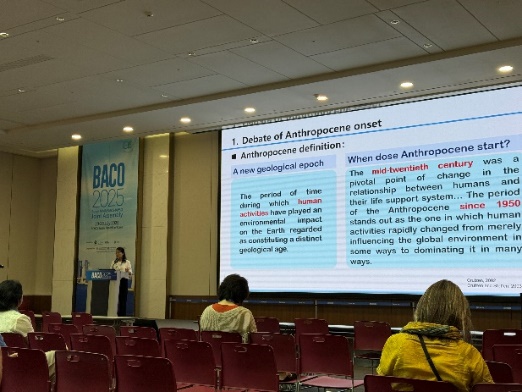
Parallel session: C05 Cryospheric biogeochemical cycles and environmental effects
The 2nd International Conference on Climate Change and Disaster Risk was held in Beijing, China, from 18 to 20 October 2025. It was jointly organized by China-Pakistan Joint Research Center on Earth Sciences, UNESCO Chair for Mountain Disaster Risk Reduction and Resilience, Institute of Mountain Hazards and Environment, Institute of Geographic Sciences and Natural Resources Research, Chinese Academy of Sciences, Quaid-i-Azam University, and National Disaster Management Authority, Pakistan. This international conference focused on the impacts of climate change on natural hazards, the mechanisms of disaster occurrence and response measures, and the disaster risk management. IGU CHAR co-organized a parallel session titled “Mountain Cryosphere Disasters, Environment, and Sustainable Development”. This session brought together around 20 scientists and young researchers from different countries, featuring scientific presentations and in-depth discussions on the impacts of cryospheric changes and sustainable development in the mountain and polar regions. This parallel session was closely aligned with the research scope of IGU CHAR.
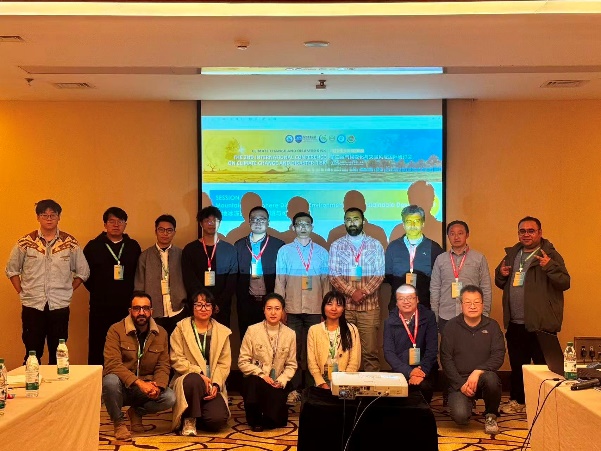
Parallel session: Mountain Cryosphere Disasters, Environment, and Sustainable Development
In collaboration with the China Society of Cryospheric Science (CSCS) and the China National Committee for the International Association of Cryospheric Sciences (CNC-IACS), IGU CHAR co-organized the 3rd Chinese Conference of Cryospheric Science. This conference was held in Lingshui, China, from 21 to 22 March 2025. The UN General Assembly declared 2025 the International Year of Glaciers’ Preservation anddeclared 2025-2034 as the Decade of Action for Cryospheric Sciences, with March 21 designated as the annual World Day for Glaciers starting from 2025. Coinciding with these global initiatives, this conference brought together over 400 Chinese scientists, young researchers, and students for presentations and discussions. It aimed to explore cryospheric changes and mitigation strategies, thereby raising academic influence and public awareness, ultimately contributing to global efforts to address climate change and support sustainable development.
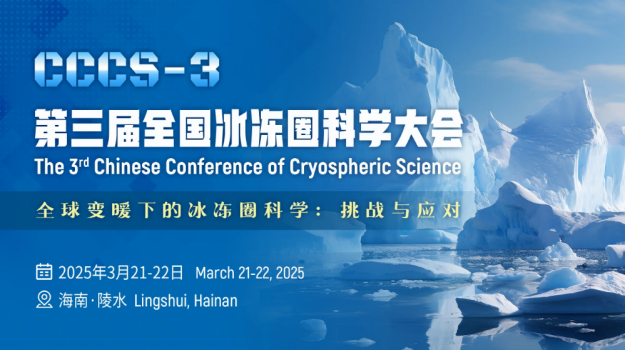
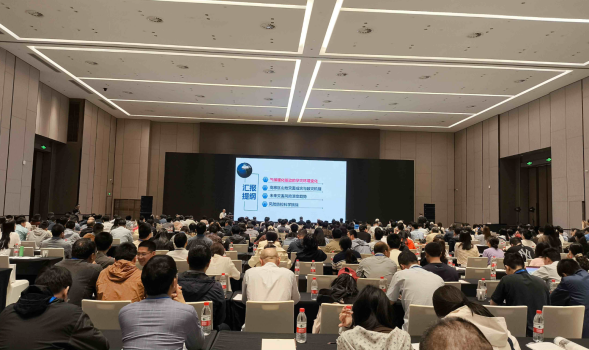
The 3rd Chinese Conference of Cryospheric Science
Glaciers are among the most sensitive and direct indicators of climate change, and play an important role in the climate system, water resource, and human society. Glacier inventory is censuses of glacier resources. The Northwest Institute of Eco-Environment and Resources, Chinese Academy of Sciences, released the latest China’s glacier inventory on 21 March 2025. The institute completed the first and second China’s glacier inventories in 2002 and 2014, respectively, and carried out the third inventory using 2020 as the baseline year to document current glacier conditions. IGU CHAR participated in this latest glacier inventory project.
Several international media reported on the research progress of this glacier inventory project. According to Shichang Kang, lead researcher of the project and chair of IGU CHAR, China’s glaciers covered about 46,000 square kilometers, with some 69,000 individual glaciers. Compared to the results of the first inventory, from the 1960s to 2020, China’s glacier area shrank by 26 percent, with nearly 7,000 small glaciers vanishing entirely. Compared to the results of the second inventory, China’s glacier area decreased by approximately 6 percent from 2008 to 2020. That further underscores the urgent need for international and interdisciplinary research and collaboration addressing the rapid cryospheric changes and sustainable development.
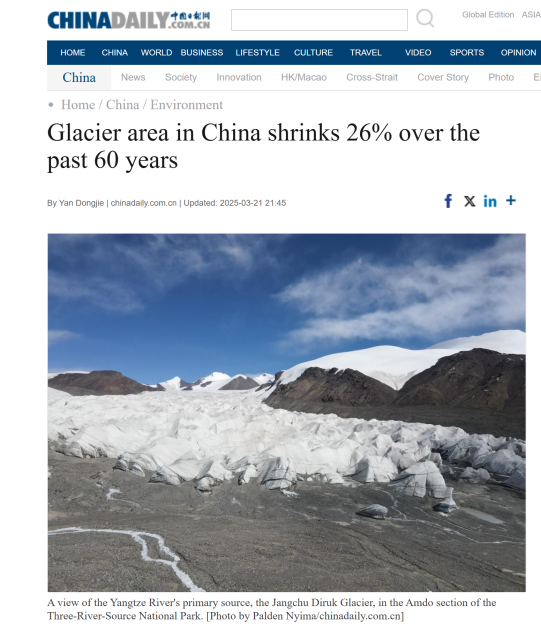
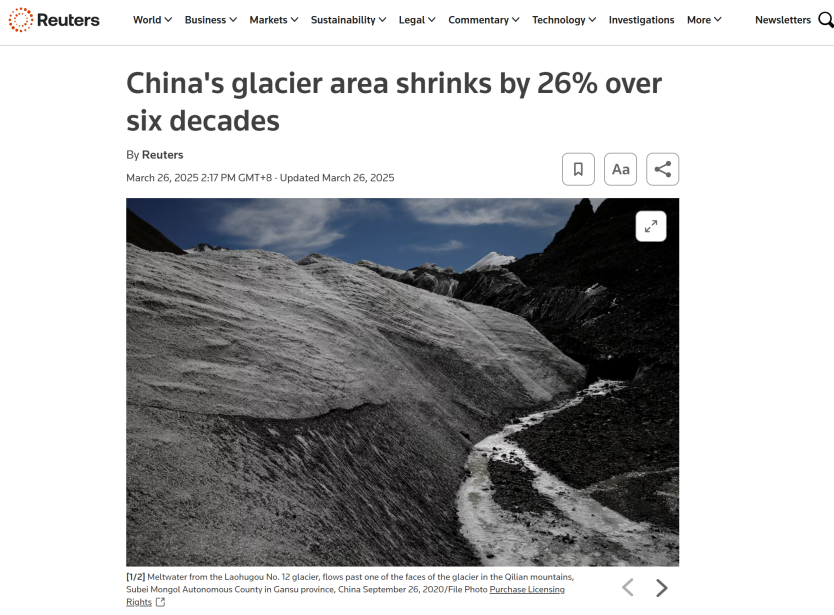
China Daily and Reuters reported on China’s Third Glacier Inventory project progress
The International Training Workshop on Climate Change and Water Safety Effects along the China-Pakistan Economic Corridor (CPEC) was held in Islamabad, Pakistan, from 9 to 14 April 2025. This training workshop aimed to enhance personnel expertise in climate change and water safety effects along the CPEC. More than 60 researchers, administrators, and technical professionals from countries including Pakistan, China, Nepal, Sri Lanka, Bangladesh, and Afghanistan attended the workshop. Shichang Kang, chair of IGU CHAR, organized a team of scientists to deliver lectures on regional climate change, water safety, and cryospheric disaster risk management to the participants.
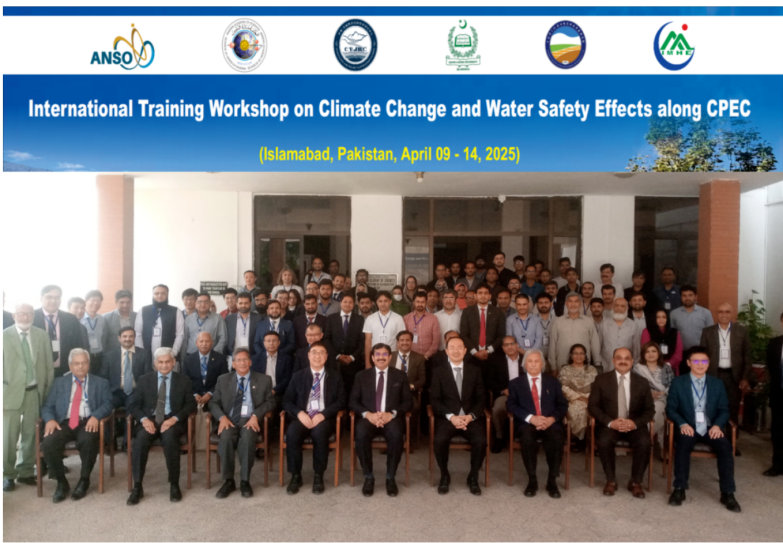
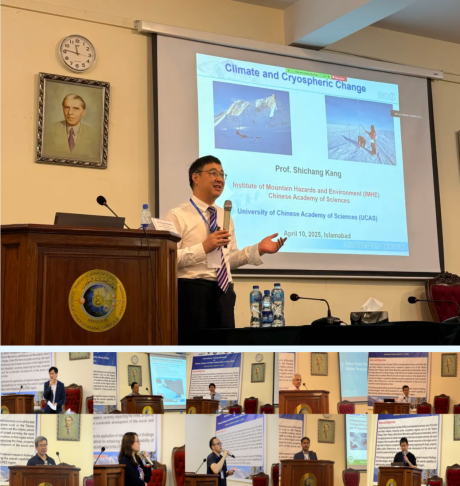
International Training Workshop on Climate Change and Water Safety Effects along the CPEC
IGU CHAR focused on the science popularization activities for the public. In 2025, young scientists participated in science popularization activities for students and teachers in primary and secondary schools in Lanzhou, China. Several interactive lectures on climate change and cryospheric science were delivered using multimedia tools, and a campus knowledge competition was organized. These activities not only effectively supported instruction from teachers but also enhance students’ understanding of complex cryospheric concepts, including snow and ice melt, permafrost degradation, and climate warming.
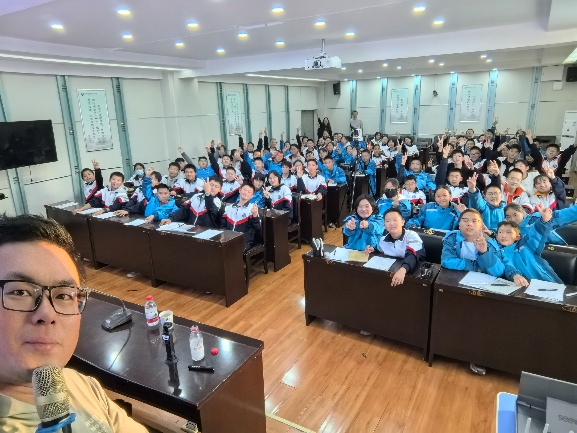
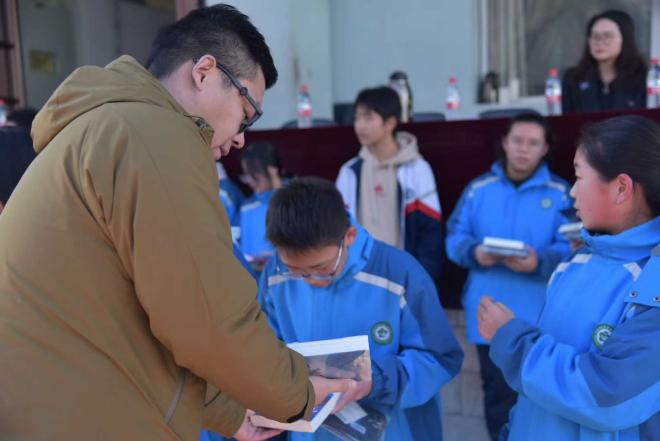
Photos from the classroom lectures and the knowledge competition award ceremony